Article Highlights
- Sephora misread Korea’s product hyper-concentration from market-led natural selection as a lack of diversity. In a marketplace where home-grown Korean brands already offer products tailored to their exact needs, there was little incentive to settle for “close enough” Western imports. The absence of Korea-exclusive messaging and offerings signaled to Korean consumers a weak commitment to the market and a lack of understanding of unique, local needs.
- Sephora’s global logistics and procurement model was an unavoidable disadvantage that, while at heart was an issue of agility, needed alternative solutions to overcome. To compete, it was crucial to behave not as a just a distributor, but a cultural operator — shaping beauty conversations, curating products ahead of the hype, and generating demand instead of following it.
- Sephora’s lack of digital infrastructure — particularly a fully functional app or robust e-commerce presence at launch — positioned it as a digital underdog in one of the world’s most mobile-savvy markets. This delay essentially made Sephora Korea a Most Viable Product at launch, and hurt the company unpredictably when the pandemic hit soon after.
- Sephora’s exit highlights a hard truth: entering Korea’s beauty and personal care market demands more than global recognition — it requires a willingness to abandon long-held market beliefs and to reengineer trusted global strategies from the ground up.
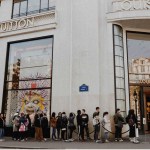
Sephora’s exit from the South Korean market in March of 2024 marked a high-profile retreat for one of the world’s most recognized beauty retailers. The company had entered Korea in 2019 with considerable fanfare, with foot traffic estimated to have reached over 39,000 within the first six days. Sephora established a flagship location in Seoul’s affluent Gangnam district, and signaled plans to open 14 more stores by 2022. However, despite its global branding power and the backing of LVMH, Sephora struggled to gain a meaningful foothold.
The causes of this failure were not circumstantial but a systemic miscalculation, rooted in a flawed assessment of market demand, a lack of localization, and ungrounded assumptions about consumer behavior.
False Projection of Global Market Trends as Local Consumer Needs
Ex-Sephora Korea GM Kim Dong-ju believed a key value proposition for Sephora in Korea was the expansion of options in the color cosmetics and fragrance categories. However, it was a mistake to interpret the highly centralized nature of Korea’s beauty product landscape as a lack of diversity or market maturity. In fact, it reflects the opposite. Korea boasts one of the most sophisticated and mature beauty markets in the world, arguably more so than the U.S. and Europe. At the time of Sephora’s entry in 2019, beauty and personal care spending accounted for roughly 0.62% of South Korea’s GDP, compared to just 0.42% in the U.S. — a 47.6% difference in proportional market share.
The reality is that product offerings in Korea are not “limited”, but the result of market-driven natural selection. Products that can be seen on shelves are what remains after thorough vetting by a trend-sensitive, knowledgable, and vocal consumer base.
Korea’s pronounced racial and cultural homogeneity accelerates the diffusion and consolidation of beauty norms through shared media, pop culture, and social platforms. The outcome is a concentrated demand for specific, on-trend products and formulations that have withstood the test of a ruthless market filter.
Rather than lacking options, Korean consumers know exactly what they want. High convergence in trend & demand leaves little room for generalist, exploratory retail formats to flourish. Sephora’s globalized product selection, while aspirational in many markets, did not keep pace with the demand for ultra-local, trend-responsive offerings in Korea. Furthermore, hero categories for Korean women, such as skincare-first regimens, sun protection, and lightweight formulations — were not adequately represented or competitively priced at the time.
Banking on top-down brand awareness, Sephora did not sufficiently check for, or were not able to detect, these early warning signs — something that could’ve been avoided with nuanced brand sentiment tracking. The disconnect between the brand and its audience was the inevitable result.
What could have been done differently? Many of the international brands introduced by Sephora in Korea were highly recognizable and generated genuine interest, as seen by the high foot traffic and social media buzz. However, this enthusiasm was short-lived. Korean consumers quickly realized that these products, while curated to be as close a fit to local preferences as possible, still fell short of being a perfect match. In a marketplace where a plethora of home-grown Korean brands already offer products tailored to their exact needs, there was little incentive to settle for “close enough” yet more expensive Western imports.
A more effective strategy for Sephora could possibly have been to partner with carefully selected local or global brands to co-develop Korea-exclusive products. This would have signaled cultural fluency, proactiveness, and deep commitment to the market. It would also have demonstrated, by way of action, to Korean consumers that Sephora understands and is dedicated to meeting their unique needs.
Trying to Keep Up with Trends While Local Brands Set Them
Compounding these challenges was Sephora’s operational rigidity stemming from centralized global supply chains. Unlike local brands and distributors, which are structured for speed and flexibility, Sephora was tethered to a global logistics and procurement model designed for scale, not speed. This meant longer lead times for product launch, slower adaptation to market trends, and delayed responses to consumer feedback.
In contrast, Korean indie and mid-sized brands often test products through influencer-led micro-launches, iterate based on early feedback, and bring full collections to market in a matter of weeks. This efficiency extended to fulfillment as well, with leading Korean retailer Olive Young offering ultra-fast fulfilment, including same-day delivery services reported by The Chosun Daily. This created a fundamental mismatch in market tempo, where Sephora appeared sluggish and out-of-sync in a space defined by immediacy and innovation.
However, to mitigate such structural disadvantages takes more than the optimization of supply chains. For Sephora to compete, it would have needed to behave not as a just a distributor, but a market leader. By shaping beauty conversations, curating products ahead of the hype, and generating demand instead of following it, consumers will feel that their products are worth the wait.
To achieve this, Sephora would have needed to move beyond passive curation to active co-creation and more importantly, the establishment of exclusivity. This means implementing strategies focused on integrating themselves within local beauty culture such as launching K-beauty collaborations, partnering with K-pop idols, or scouting emerging indie labels before they go mainstream.
It would also mean restructuring internal processes to allow for decentralized merchandising authority — giving the Korean market team the autonomy to make fast buying, inventory, and marketing decisions based on local signals, not global cycles.
Ultimately, success in Korea demands both institutional agility and proactivity, not just logistical efficiency. Without the cultural foresight and organizational empowerment to set the pace rather than match it, Sephora was always one step behind the market.
Using a Minimal Viable Product (MVP) to Compete with Digital Giants
When Sephora entered South Korea in 2019, it did so without a fully localized digital presence — notably, no mobile app at launch and limited integration with platforms Korean consumers use daily, such as Kakao or Naver. In contrast, its main competitor, Olive Young, was already operating far beyond traditional retail, with initiatives like AR try-on services and other digital experience upgrades, reported by Korea Science. Their initiatives included consistent QR code promotions, augmented reality (AR) makeup try-on services in partnership with Samsung, and seamless integration with apps like KaokaoTalk. These services were not just a tech novelty; they addressed a real need in a digitally native consumer base that expects frictionless, mobile-first beauty discovery.
Sephora’s lack of digital infrastructure — particularly a fully functional app or robust e-commerce presence at launch — positioned it as a digital underdog in one of the world’s most mobile-savvy markets. It’s physical stores, modeled after its Western flagships, also felt foreign in both layout and utility, lacking the digital integration consumers have come to expect. This decision (or delay) for digitization essentially turned Sephora’s entire Korea strategy into a kind of MVP, and ultimately cost the company more than could have been anticipated when the pandemic eventually hit.
The contrast between Sephora and Olive Young illustrates a broader point: in hyper-digitized markets like Korea, digital ecosystem integration is not value-added but a necessity and a priority. Korean (and Chinese and Japanese) consumers navigate a commerce landscape that is deeply intertwined with messaging apps, social media platforms, mobile wallets, and seamless cross-channel interactions. In these environments, brands are not simply expected to be present online — they are expected to be embedded into the daily digital routines of their customers.
The Aftermath: Did Sephora Leave a Void?
Despite the Sephora’s global recognition, its departure caused barely a ripple in Korea’s beauty landscape. At the time of its exit, Sephora held a market share estimated at under 1%, reflecting its limited penetration.
The vacuum left behind was quickly, and perhaps even invisibly, absorbed by existing retail structures. Olive Young continued its aggressive expansion in both footprint and digital capabilities, boasting 90% market share in the beauty & personal care space in 2024. High-end department stores like Shinsegae and Lotte reasserted their dominance in luxury cosmetics, offering concierge-style service and exclusive brand partnerships. Meanwhile, the D2C ecosystem flourished, with domestic and international brands opting to distribute via Naver Smartstore, KakaoTalk commerce, and global marketplaces like Shopee and Amazon.
Sephora’s exit highlights a hard truth: entering Korea’s beauty and personal care market requires more than global recognition — it demands the willingness to abandon long-held market beliefs and to reengineer trusted global strategies from the ground up. Rather than building grassroots credibility, Sephora leaned too heavily on top-down brand awareness, a model that resonates less in Korea’s highly mature, function-first beauty ecosystem. Its failure to meaningfully capitalize on local trends, demand, partnership opportunities, and platforms undermined its ability to build emotional resonance and trust — qualities that are not optional in a market where consumers are experts in their own right and loyalty is hard earned.
If your brand is planning to expand into Asia, start with the fundamentals: know the market before you enter it. At Sapling Insights, we specialise in market research across Asia, helping businesses uncover the realities behind the trends — and make smarter, locally-informed decisions.