Article Highlights
- While Pizza Hut China’s primary goal for its bullfrog pizza was marketing and brand relevance, it also plays a role as part of a broader localization strategy. By using shock factor, cultural playfulness, and social media virality Pizza Hut aimed to reposition its brand from a foreign establishment a local staple.
- While Southern-style fried chicken is foreign, the idea of sharing a warm meal as a family is universal. KFC pitched an idyllic scenario and ultimitely made eating fried chicken synonymous with family bonding. Over time, the act of pre-ordering KFC for Christmas became a habit, then a cultural expectation.
- In Korea, malatang and tanghulu weren’t manifested from strategy decks, but were organic social phenomena. Their popularity is a reminder that in markets like Korea, grassroots trends can become cultural institutions, but only if brands are nimble enough to meet them halfway.
When we think of food localization, it’s often framed in terms visuals and taste — adjusting ingredients, names, or packaging to better suit local palates. But in East Asia, effective localization is more than just satisfying tastebuds, it requires a union between brand(ing) and culture. For food and beverage brands seeking sustainable growth in local markets, fine-tuning products attributes should only be seen as a means to an end. Long-term success in Asia hinges on a brand’s ability to proactively carve out a niche for itself within the dining habits of local consumers.
In this article we examine three distinct case studies of food localization in East Asia: Pizza Hut’s bullfrog pizza in China, Japan’s long-standing tradition of eating KFC for Christmas, and the viral rise of Chinese street foods, malatang and tanghulu, in Korea. While each case is shaped by different market dynamics, they collectively highlight a common theme: winning in East Asia requires not just adapting to local tastes, but recognizing and adapting to deeper social drivers — demand for novelty, dining as a ritual, and cultural pride.
China: Pizza Hut and the Bullfrog Pizza
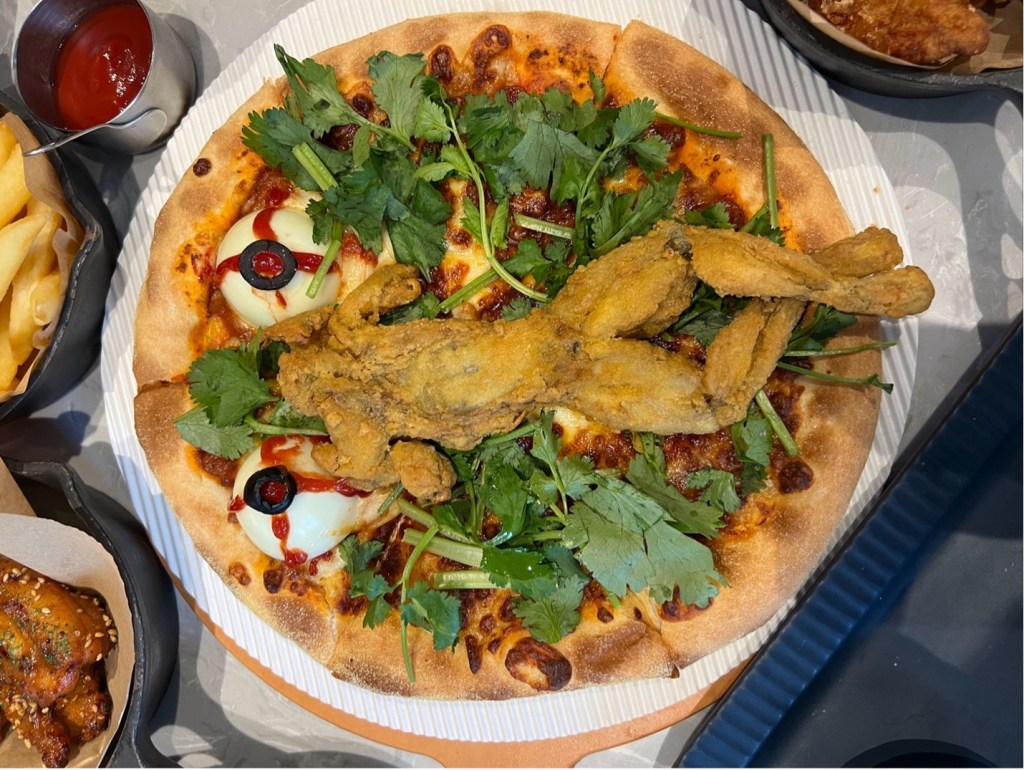
In 2024, Pizza Hut China launched a limited-time bullfrog pizza featuring Sichuan-style chili oil, lotus root, and as the name suggests, a whole fried frog. The product immediately drew massive amounts of attention online, with responses ranging from amused curiosity, bewilderment, to genuine praise. But beyond its shock value, the bullfrog pizza represents a strategic pivot for a brand navigating an increasingly competitive Chinese dining landscape.
Reclaiming Relevance Through Cultural Reinterpretation
In China, Pizza Hut occupies a different space from fast food players like KFC or McDonald’s. Pizza is not considered a convenient, on-the-go meal, but an occasional indulgence. Historically, Pizza Hut marketed itself as an authentic, dine-in experience — a place for social gatherings, and for some, to experience pizza for the first time. Personally, I recall when the first Pizza Hut opened in my hometown of QingDao, hungry diners had to queue for over 2 hours to get in. However, with the rise of modern Western-style eateries, boutique pizza chains, and food delivery platforms, this positioning has become outdated.
In recent years, there are few left that still consider Pizza Hut as “authentic”. Yet, under its business model as a franchise, it is unfeasible for Pizza Hut to maintain the identity of an authentic pizzeria while retaining price competitiveness.
Rather than attempting to compete with artisanal restaurants on culinary purism, the brand has leaned into an alternative identity: Chinese pizzeria — expressive, innovative, with familiar flavors. Pizza Hut began creating rustic, locally-inspired dishes such as the popular Durian Pizza (actually loved for its flavor), abalone porridge, and fried rice. From the perspective of Chinese consumers, Pizza Hut gradually grew into a staple, a regular place to eat — not just for when the occasional craving for Western food hits.
While the primary goal of the frog pizza was for marketing and brand relevance, it also plays a role as part of a broader localization strategy: using shock factor, cultural playfulness, and social media virality as a means to reinforce its brand positioning.
Why It Works in China
Chinese consumers — particularly younger urban ones — are highly receptive to novelty and virality. More than nourishment, food has become a form of entertainment and self-expression. Visiting viral (网红店) restaurants is a way for people to show others their lifestyle, asthetic, and personality. Limited-time items and provocative combinations are often shared on platforms like Weibo, RED (Xiaohongshu), and Douyin to similar effect. Pizza Hut’s recent campaigns reflect their belief that in the current landscape, brand rejuvenation comes not through tradition, but full commitment to cultural nuance and experiential differentiation.
The frog pizza in particular, officially dubbed the “Goblin Pizza”, was also launched in collaboration with Tencent’s mobile game Dungeon & Fighter: Origins. Themed partnerships like this are common yet effective in China’s youth market, where gaming and food often intersect in co-branded promotions.
Reactions to the bullfrog pizza were mixed but highly engaged. Some social media users on Weibo jokingly tagged the Italian embassy, while others posted memes and videos trying the dish. More than just sales, the campaign succeeded in generating conversation. While not intended as a long-term menu item, the Goblin Pizza reinforced Pizza Hut’s position as a fully localized brand willing to play into the evolving tastes and humor of young Chinese consumers.
Japan: KFC and the Ritualization of Christmas
KFC’s role in Japan’s Christmas culture is one of the most frequently cited examples of successful brand localization — and for good reason. Since the 1970s, KFC has positioned its fried chicken as a Christmas meal, and today, an estimated 3.6 million Japanese families pre-order “Christmas Party Barrels” each December. But the tradition didn’t happen organically — it began with a campaign called Kurisumasu ni wa Kentakkii (“Kentucky for Christmas”), launched in 1974.
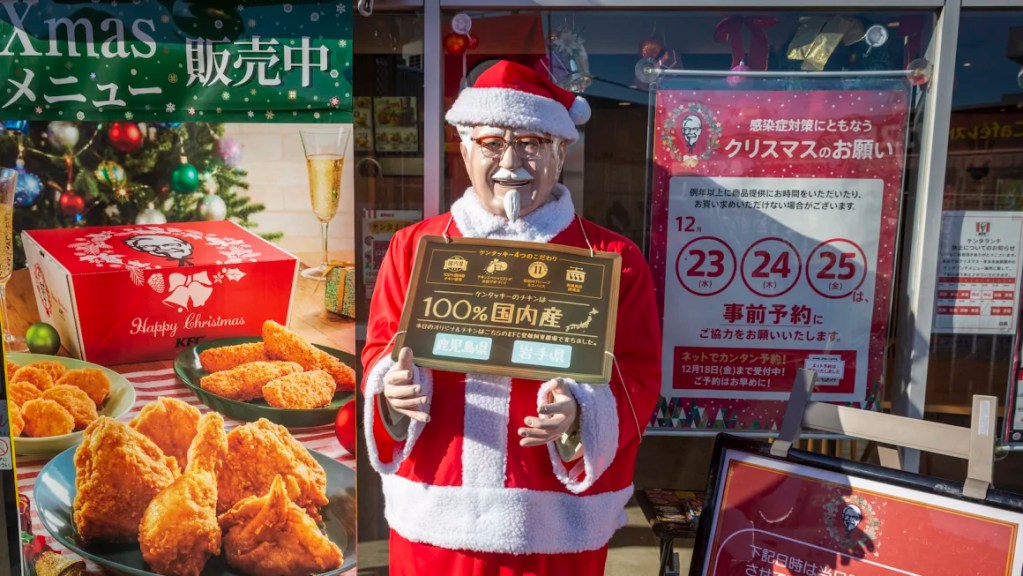
The campaign was the result of a clever observation by Takeshi Okawara, the manager of Japan’s first KFC. After overhearing a group of foreigners reminiscing about eating turkey for Christmas, Okawara saw an opportunity to offer a Western-style holiday meal — substituting turkey with fried chicken. The campaign promised a taste of Western celebration at a time when Christmas was a novelty in Japan. It resonated with families seeking new traditions and gradually evolved into a nationwide custom.
Adoption of Ritual Through Symbolic Alignment
The success of the campaign can also be attributed to broader cultural trends: during the 1970s, Japan was experiencing a period of rapid economic growth and simultaneously a great fascination with American culture. Western sports, fashion, and food were seen as aspirational, and KFC positioned itself at the center of this excitement.
Capitalizing on this, KFC Japan invested heavily in advertising, including images of smiling families sharing KFC during the winter holidays. While Southern-style fried chicken is foreign, the idea of sharing a warm meal as a family is universal. KFC pitched an idyllic scenario and ultimitely turned eating fried chicken symbolic, an act synonymous with family bonding. What began as a temporary promotion quickly started a lasting behavioral shift in Japanese holiday consumption. This illustrates a key lesson in localization: strategies structured around explosive short-term trends, if capitalized on and executed correctly, have the potential to expand into lasting rituals.
Overall, the campaign’s longevity highlights the fact that the best opportuninities appear when foreign brands not only localize, but ritualize.
Lessons for Transforming Localization into Ritualization
KFC succeeded not by replicating Western Christmas traditions, but by filling a gap in domestic holiday behavior. In a country where people were eager to celebrate Christmas, yet home ovens are uncommon and turkey is unavailable, fried chicken became an accessible alternative that families could associate with celebration and togetherness. Over time, the act of pre-ordering KFC for Christmas became a habit, then a cultural expectation.
The strength of this strategy lies not in product adaptation, but in cultural integration. KFC embedded itself into the Japanese calendar and reframed its product as part of a recurring national ritual. This kind of localization requires a rare mix of clever utilization of short-term trends, long-term investment, and cultural sensitivity — but the payoff is exceptional brand stickiness and seasonal or occasional revenue dominance.
South Korea: Tanghulu, Malatang, and the Consumer-Led Reinterpretation of Street Food
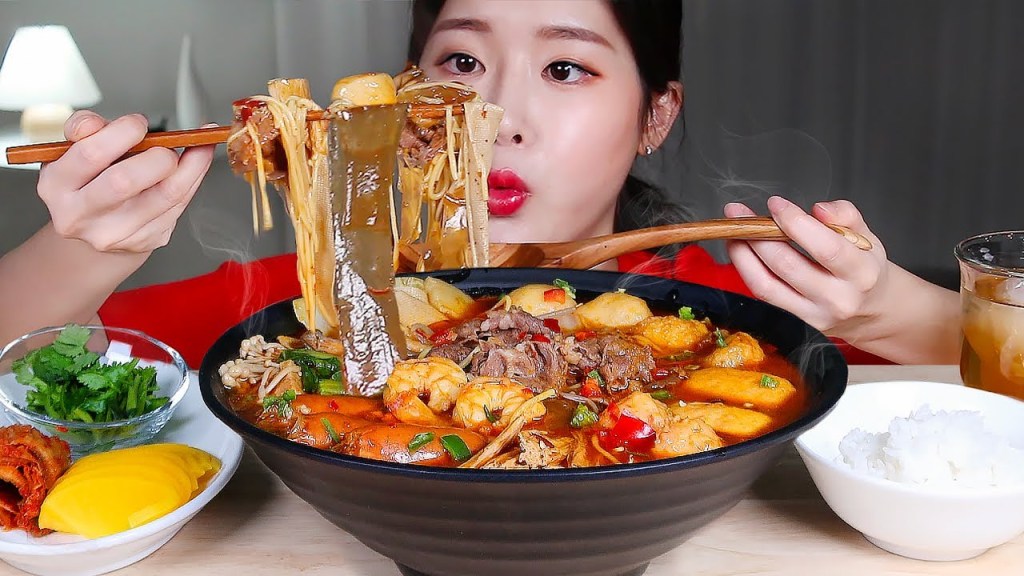
In South Korea, the most notable recent localization trend doesn’t stem from a single brand, but from the organic, rapid domestication of foreign-origin street foods: malatang and tanghulu. Both were originally Chinese — malatang a spicy, customizable soup from Sichuan, and tanghulu a sugar-coated fruit snack from Beijing. These foods exploded in popularity in Korea thanks in part to the highly reactive, trend-oriented nature of Korean consumers. Aesthetically striking and easily shareable on social media, they quickly became viral food experiences. Today, both have become wildly popular across Korean cities, with localized variations and high consumer visibility.
Malatang: Functional Customization Meets Korean Dining Culture
Korean consumers embraced malatang not only for its bold flavor profile, but for its flexible format. The self-serve, build-your-own-bowl model aligns well with Korea’s casual dining culture, where group meals and individual customization coexist. Local businesses quickly adapted the concept, adjusting spice levels, condiments, and ingredient selections to suit Korean preferences.
Tanghulu: Aesthetics and Social Media Appeal
Tanghulu found popularity especially among younger consumers, who viewed the glossy, jewel-like appearance of the snack as Instagram-worthy. In Korea, tanghulu evolved from a winter treat into a year-round dessert trend — often sold near schools, subway stations, and in food courts. The snack is particularly resonant with teens and Gen Z consumers who prioritize both aesthetics and emotional comfort in food choices.
A Model for Acting on Grassroots Localization
The popularity of tanghulu and malatang in Korea underscores another important reality: sometimes, localization doesn’t begin with the brand — it begins with the consumer. These trends didn’t originate from top-down strategy but spread organically through informal vendor networks, aesthetic appeal, and cultural remixing.
In such cases, the role of brands is not to initiate, but to respond. The Korean market is uniquely fast-moving and trend-sensitive, especially among younger consumers. Trends can erupt quickly and unexpectedly. Successful brands are those that possess the agility and spontaneity to recognize these moments and capitalize on them — whether by co-opting visual language, adjusting their menus, or launching limited-time items.
Aside from following an overarching localization plan, foreign brands in Korea can often benefit more from flexible localization frameworks that allow them to respond in real time to consumer behavior. Malatang and tanghulu weren’t manifested from strategy decks, but are social phenomena. Their popularity reminds us that in markets like Korea, grassroots trends can become cultural institutions, but only if brands are nimble enough to meet them halfway.
Conclusion: From Product Adaptation to Cultural Participation
These three case studies show that in East Asia, localization is not just a box to check — it’s a long game of relevance, identity, and embeddedness. Success doesn’t come from mimicking local flavors or aesthetic trends in isolation, but from understanding how food functions within culture: as ritual, as novelty, and as a reflection of social values.
- In China, Pizza Hut has shifted from chasing authenticity to embracing cultural fluency, using bold flavor combinations and strategic co-branding to reframe itself from a novelty to a staple dining destination.
- In Japan, KFC’s Christmas miracle has shown how a spontaneous promotional idea can become a national ritual — proof that brands can shape culture if they offer relevance, consistency, and emotional payoff.
- In Korea, the popularity of tanghulu and malatang underscores that localization doesn’t always start with brands — but agile, observant ones can turn viral moments into tailored strategies.
Across all three markets, the most successful localization efforts don’t just adapt to consumer behavior — they become part of it. The lesson is clear: in East Asia, food localization isn’t about product — it’s about participation. The brands that thrive are those that are willing to reinvent themselves according to how local customers live, eat, connect, and express themselves.